
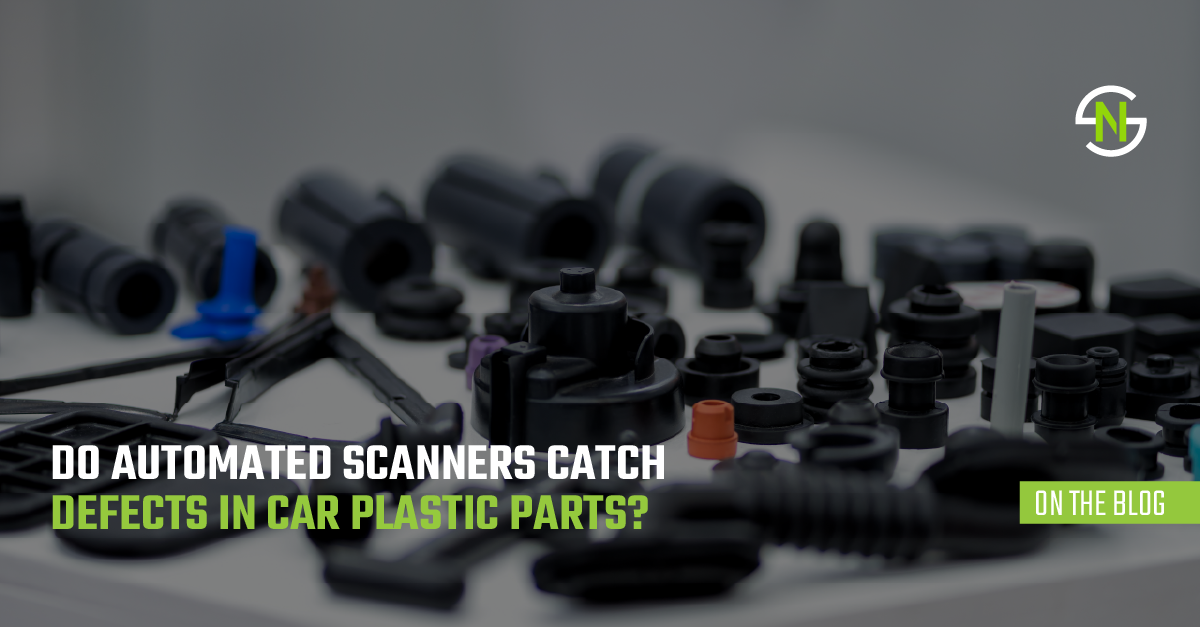
Automated vision inspection systems can catch micro-defects in car plastic parts before they are shipped to customers if they are designed and validated appropriately.
Last year, over 29 million vehicles were recalled in the United States, according to the National Highway Traffic Safety Administration (NHTSA). Defective automotive products can cost manufacturers millions, especially when they lead to legal claims.
In this fast-paced sector, where every second counts, quality is king, and ensuring that your products meet high standards is paramount. Automated vision inspection systems can revolutionize quality control in automotive parts by catching micro-defects before they reach the customer.
Why Quality Control in Manufacturing Is Important
Quality control ensures that every part produced meets the specified standards. In the automotive industry, micro-defects can lead to significant consequences, including:
- Operational issues
- Safety risks
- Higher costs over time
With easier access to cutting-edge technology, manufacturing companies like Nova Stevensville are using techniques involving automated optical inspection of plastics to enhance dimensional quality control.
How Automated Vision Inspection Systems Work
Automated vision inspection systems can perform defect detection molding tasks using high-resolution cameras and advanced algorithms. These systems enhance the inspection process by providing:
- High-Resolution Imaging: Captures minute details that the human eye may miss
- Real-Time Processing: Analyzes data instantly, providing immediate feedback
- Consistent Results: Eliminates variability associated with human inspection
- Data Analytics: Aggregates data for continuous improvement diagnostics
These features allow manufacturers to identify issues manifesting as micro-defects, such as surface blemishes or dimensional inaccuracies, before car plastic parts are shipped.
The Benefits for Car Plastic Parts Manufacturers
Most tier-1 automotive facilities aim to achieve zero-defect manufacturing and stop faulty parts from being shipped to customers. Many have embraced automated vision inspection systems because of the numerous advantages they offer, including:
- Increased Efficiency: Automating the inspection process speeds up production workflows
- Cost Savings: Early detection of defects minimizes waste and rework costs
- Enhanced Reputation: Consistently delivering defect-free products elevates a company’s reputation
At Nova Stevensville, where precision is vital, integrating these advanced systems strengthens the overall manufacturing quality, particularly for parts supplied to giants like:
- Chrysler
- BMW
- Tesla
Challenges in Implementing Inspection Systems
While there are numerous benefits, many manufacturing facilities face challenges when integrating technology. These include:
- Initial Investment: Upfront costs for these systems can be a barrier for some companies
- Training: Staff may require training to adapt to new technologies
- Maintenance: Technology needs regular upkeep to ensure optimal performance
To successfully implement a vision inspection system, companies must weigh these challenges and devise strategies to overcome them, ensuring long-term benefits.
Make Quality Control a Priority
Adopting automated vision inspection systems can vastly improve the ability to catch micro-defects before shipping, safeguarding against recalls and brand damage. For manufacturers, particularly those in the automotive sector, the choice to invest in quality control technologies like these is not just about compliance. It’s about funding long-term success.
Elevate Your Manufacturing Game With Nova Stevensville
With automotive parts among the most common defective products that lead to legal claims, high-quality, defect-free car plastic parts are a priority in the automotive industry.
Nova Stevensville is a top-tier supplier delivering excellence for over two decades. By leveraging state-of-the-art technologies, we guarantee that every component we produce meets rigorous industry standards. Request a quote and let’s drive innovation together!
