
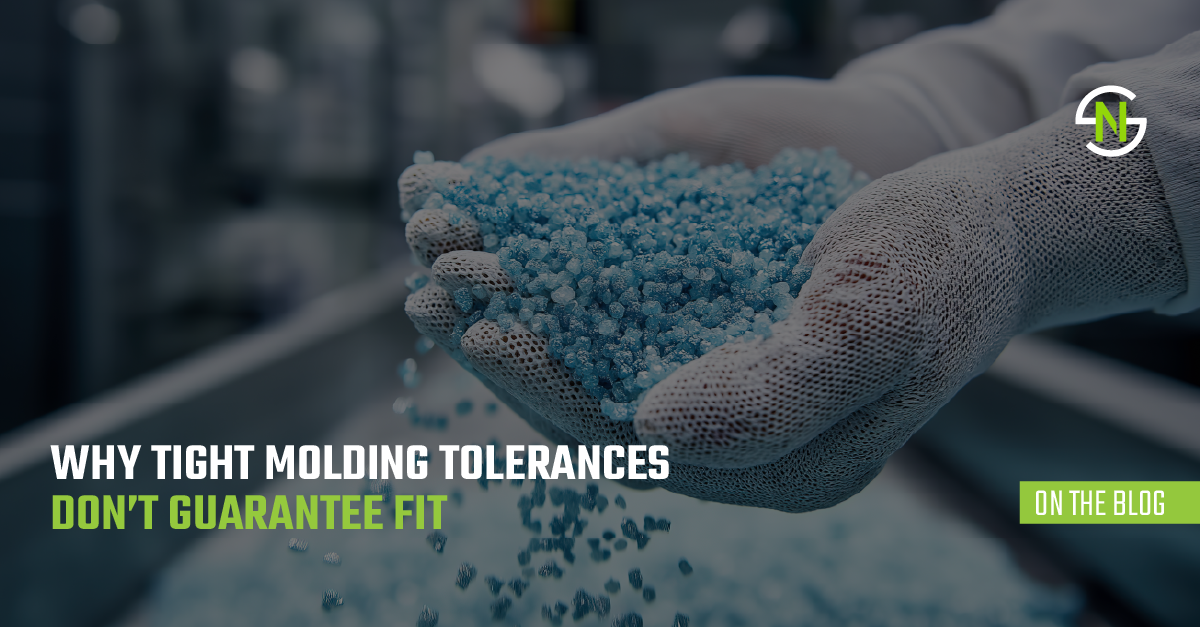
Tight molding tolerances do not guarantee a perfect fit in plastic assembly. Parts can still change shape as they cool or when they are joined.
A 2025 study in Polymers, Molded Part Warpage Optimization Using Inverse Contouring Method, found that changes to mold design and processing reduced warping by about 82%. We look beyond the first measurements to understand how parts will fit in the finished product.
Why Do Parts Change Shape?
Plastic can keep cooling after it leaves the mold, and thicker areas often cool more slowly than thin walls. When one area shrinks more than another, the difference is called differential shrinkage.
At Nova Stevensville, we address uneven cooling and warpage by reviewing wall thickness and mold conditions. This helps us understand post-mold warpage, which is bending that occurs after a part leaves the mold. A cover can meet its length limit while one corner lifts away from its matching surface.
What Helps Plastic Assembly Fit?
A tolerance is the amount a size can vary and still meet the design. We use stack-up tolerance analysis to see how those small differences add together.
For example, if two mating sizes each vary by 0.1 millimeters, they can change a planned gap by 0.2 millimeters. Both parts can meet their own limits while the space between them changes.
At Nova Stevensville, controlling plastic molding tolerances includes checking the surfaces where parts meet. Small size changes add up.
Stress Changes Over Time
Even after a part cools, the stress inside it can change over time. Ambient stress relaxation describes this easing of stress at room temperature while the part is held in place.
A 2025 Results in Engineering study examined clamping force over time in plastic pipe joints. Its findings help explain why we recommend checking joints again after a set waiting period. The right timing depends on the plastic and how the part will be used.
Fixtures That Keep Parts Steady
A fixture holds parts in place while they are joined. Fixture constraint design means choosing where its supports and clamps touch the part.
In 2026, Chalmers University researchers showed that closing gaps can change shape in composite assemblies. This supports checking whether a fixture changes the shape of the part it holds.
Supports should keep thin walls steady as the clamps close. Hold the part without bending it.
Fit Checks After Joining
We use design for manufacturing principles to plan for the forces that joining adds. A screw pulls parts together while welding adds heat.
Comparing the loose part with the joined unit shows how those steps affect fit. For welded parts, measuring again after cooling gives a clearer view of the finished shape.
Using the same joining order during each trial also makes the results easier to compare. The final check should take place after the clamps open.
Practical Support From Nova Stevensville
At Nova Stevensville, our 100,000-square-foot facility in Southwest Michigan serves automotive makers directly and supports suppliers building larger systems. Our team brings more than 100 years of combined industry experience to that work.
We connect molding decisions with the needs of plastic assembly. To discuss your project with Nova Stevensville, contact our team today.
