
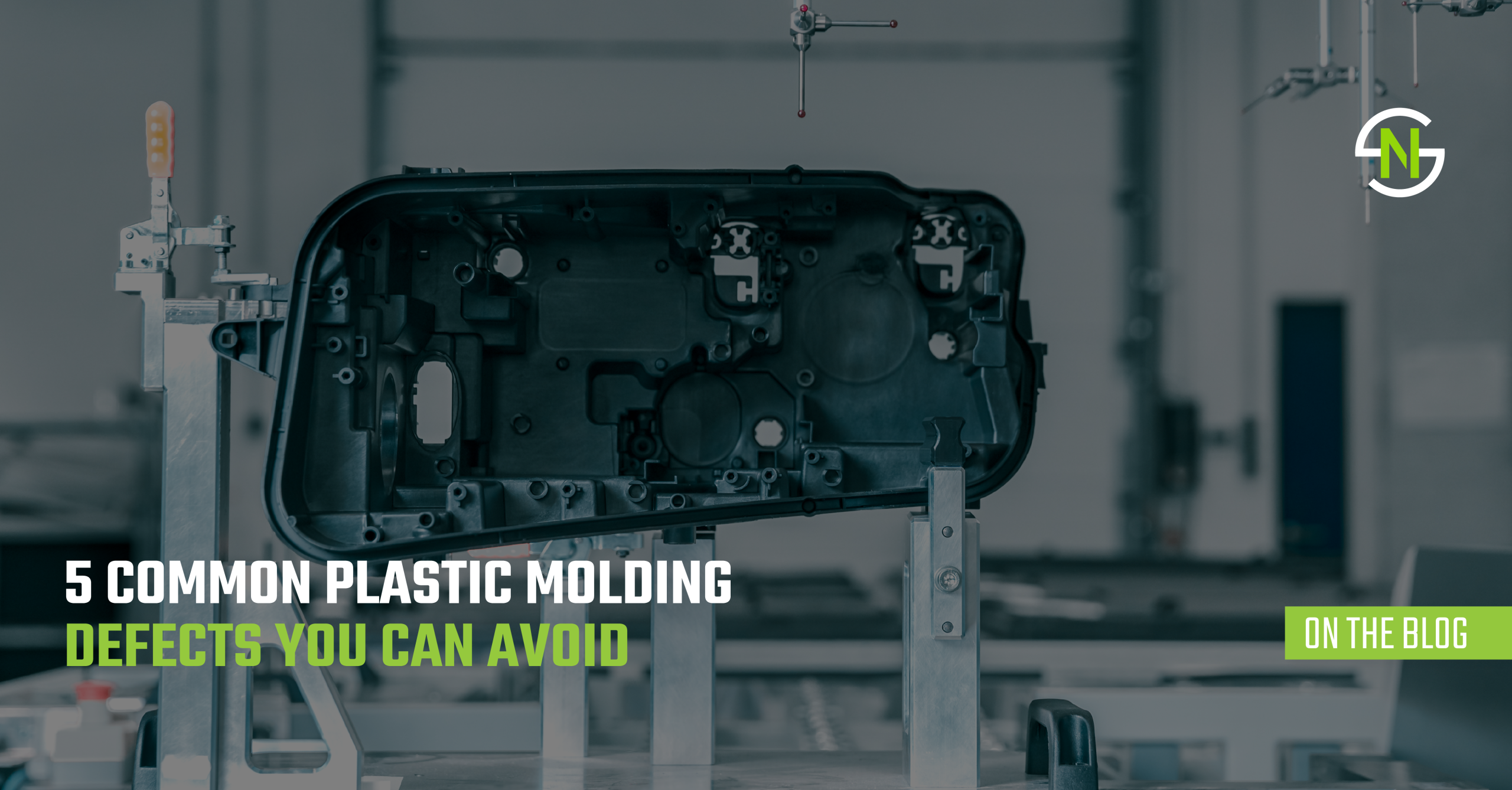
Plastic injection molding defects such as short shots, warping, surface blemishes, flash, and sink marks can significantly reduce production quality and increase manufacturing costs. These issues are often caused by improper mold design, inconsistent cooling, or processing errors.
Did you know that inefficiencies in your manufacturing process can lead to significant financial losses? According to industry research compiled by ZipDo, injection molding defect rates typically range from 8% to 12%. This means a notable portion of produced parts may require rework or become scrap, increasing overall production costs.
As a manufacturer, it’s essential to understand common plastic molding defects to avoid costly mistakes. Here, we’ll explore the five most common defects and how you can prevent them.
1. Short Shots
Short shots occur when the mold cavity doesn’t fill completely, resulting in incomplete parts. This defect can happen due to insufficient material in the feed, a low injection speed, or the improper design of the mold itself. To combat this defect:
- Ensure accurate calculations on the material needed for each run
- Adjust the injection speed according to the material used
- Evaluate the mold design to improve material flow
2. Warping
Warping is a deformation that can happen after the part has cooled. It’s often caused by uneven cooling, which can lead to stress in the material. To avoid warping:
- Control cooling rates uniformly
- Adequately space cooling channels in the mold
- Choose materials that are less prone to warping
Maintaining consistent temperatures throughout the process is vital to ensure flat, defect-free products.
3. Surface Blemishes
Surface blemishes like splay marks, pockmarks, and color streaks can detract from the aesthetic and functional appeal of your parts. These defects often stem from moisture in the resin or contamination during the molding process. To minimize surface blemishes:
- Dry the resin properly before molding
- Keep the work area clean to avoid contaminants
- Monitor processing temperatures and residence times
4. Flash
Flash, which is excess material that escapes the mold, is a common molding issue that can lead to additional processing costs. It usually occurs when there’s too much pressure in the mold or when the two halves of the mold aren’t properly aligned. Preventing flash can be achieved by:
- Ensuring optimal clamp pressure
- Regularly inspecting and maintaining the molds for proper alignment
Taking these steps will contribute significantly towards minimizing unnecessary finishes in post-production.
5. Sink Marks
Sink marks are shallow depressions that form on a molded part, typically due to uneven material shrinkage or density differences during the cooling process. These often happen in thicker sections of a part where cooling hasn’t been uniform. Prevent sink marks by:
- Ensuring uniform wall thickness in design
- Optimizing cooling strategies to allow for even heat dissipation
With attention to these factors, you can improve molding quality significantly.
Eliminate Plastic Molding Defects for Enhanced Production
Understanding and addressing plastic molding defects not only saves money but also enhances the overall production process. At Nova Stevensville, a leading plastic injection molding facility, our high standards ensure our partnerships with industries are met with quality and reliability. With over 100+ years of experience, our commitment to excellence makes us a valuable partner for your molding needs.
Don’t let defects be a barrier to your success; contact us today to learn more about how we can help improve your production capabilities.
